**Plasma TV Concept**
The full name of a plasma TV is Plasma Display Panel, commonly referred to as a plasma TV in Chinese. It operates by injecting a mixture of gases between two ultra-thin glass panels and applying voltage to excite phosphors, which then emit light. Compared to CRT (Cathode Ray Tube) displays, plasma TVs offer higher resolution, larger screen sizes, thinner designs, richer colors, and more vivid images. In contrast to LCDs (Liquid Crystal Displays), they provide higher brightness, better contrast, wider viewing angles, and more vibrant visuals.
Plasma display technology is generally categorized into two types: DC-type PDP (Direct Current Plasma Display Panel), where the electrodes are directly in contact with the gas, and AC-type PDP (Alternating Current Plasma Display Panel), where the electrodes are covered with a dielectric layer. There are three main types of color PDPs: single-substrate (also known as surface discharge) AC PDP, dual (or counter-discharge) AC PDP, and pulse storage DC PDP.
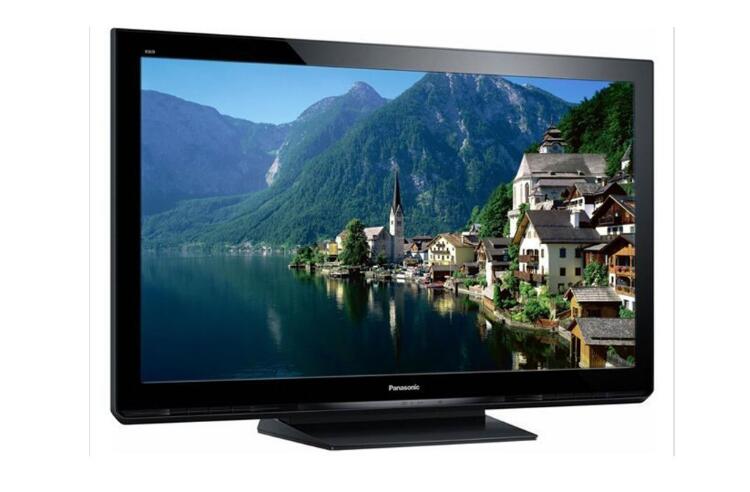
**How Plasma TV Works**
A plasma display panel is a type of display that uses gas discharge to produce images. The screen consists of numerous tiny plasma tubes, each acting as a pixel. Each pixel contains three different color emitters—red, green, and blue. By combining the light and dark states of these pixels, along with their color variations, images with various shades and colors are created, similar to how CRTs work.
At the core of each plasma tube is plasma, a gas made up of ions (positively charged atoms) and free electrons (negatively charged particles). Normally, gas molecules are neutral, with an equal number of protons and electrons. However, when a high voltage is applied, some electrons gain energy and collide with gas atoms, creating ions. This imbalance leads to a current flow, causing the charged particles to move and collide, exciting the gas atoms and making them emit light—similar to the way fluorescent lights work.
Each plasma cell is filled with a mix of helium and neon gases. When excited, these gases emit ultraviolet light, which is invisible to the human eye. However, this UV light energizes the phosphor coating on the panel, causing it to glow and produce visible light.
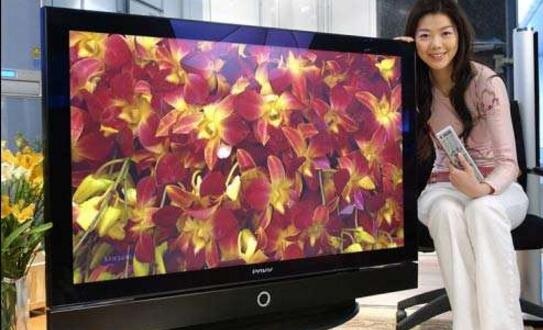
**Plasma Screen Display Principle**
The illumination principle of a plasma screen is similar to that of a fluorescent lamp. It uses plasma tubes—each acting as a basic pixel—as the light-emitting elements. These tubes are arranged on a glass substrate and separated by a certain distance (known as pitch), forming sealed discharge chambers. When a voltage is applied to the electrodes, a plasma discharge occurs within the gas mixture (usually krypton and xenon), producing ultraviolet light. This UV light then excites the phosphor coating, which emits visible light to form the image.
Key components of a plasma TV include:
- **Power Board**: Supplies power to the screen and other internal modules.
- **X Driver Board**: Generates and sends driving signals to the X electrodes based on timing signals from the logic board.
- **Y Driver Board**: Provides driving signals to the Y electrodes according to the timing signals from the logic board.
- **Logic Board**: Processes incoming video signals and generates addressing drive signals for the X, Y driver boards, and address boards.
- **Logic BUFFER Board (E, F, G)**: Converts data and control signals from the logic board into signals compatible with the COF.
- **YBUFFER Board (Upper and Lower)**: Transmits the scanning signal from the Y driver board to the screen, divided into upper and lower sections.
- **COF (Chip on Film)**: Converts signals from the logic buffer board into address signals used by the screen.
- **FPC (Flexible Printed Circuit)**: Connects the scan signal from the Y-buffer board to the Y-scan electrode on the screen.
This complex system allows for precise control over each pixel, resulting in high-quality, dynamic images that are both bright and detailed.
Battery: Integrated 600mAh Battery.Puff: 6000.Strength: 2% / 5%.Recharge: YES.Category: disposable e-cigarettes.Capacity: 15ml.package: 10pcs in a box,240pcs in a carton.Ship: Air By UPS
Shipping time: the shipping time is about 5-15 days
If big order or Custom brand order, please contact the salesman to confirm all details directly!!!
Purchase of E-Cigarette and accessories by the underaged is banned.
If you need more detail pictures, please feel free to contact us!
Shipping time: the shipping time is about 5-15 days
If big order or Custom brand order, please contact the salesman to confirm all details directly!!!
Purchase of E-Cigarette and accessories by the underaged is banned.
If you need more detail pictures, please feel free to contact us!
Welcome your label logo OEM customization!
Battery: Integrated 600mAh Battery.Puff: 6000.Strength: 2% / 5%.Recharge: YES.Category: disposable e-cigarettes.Capacity: 15ml.package: 10pcs in a box,240pcs in a carton.Ship: Air By UPS
Shipping time: the shipping time is about 5-15 days
If big order or Custom brand order, please contact the salesman to confirm all details directly!!!
Purchase of E-Cigarette and accessories by the underaged is banned.
If you need more detail pictures, please feel free to contact us!
Welcome your label logo OEM customization!
Fluum Bar 6000 vape,Fluum Bar 6000puffs,Fluum Bar vape,Fluum Bar 6000,Fluum Bar 6000 Disposable Vape,E-Cigarette Vaporizer Pen
Shenzhen Ousida Technology Co., Ltd , https://en.osdvape.com